I was in south Wales recently, staying with some friends. We visited three castles: Caerphilly, Pembroke and Carew. We also went to the ruins of Neath Abbey. On my way home, I also went to Raglan and Goodrich Castles. Goodrich is in the Marches, that borderland between Wales and England, and still very much part of the defences.
I say “We went to the ruins of Neath Abbey”, as if the other buildings were complete and inhabited! Of course, all the castles are also ruined, and so I found myself trudging round grassy courtyards, with half-height, half-ruined walls surrounding them. Up stone spiral staircases in towers and turrets, to the top of the keep or the gatehouse, only to find someone has fixed railings or a perspex screen. For safety, of course. I understand their reasoning. But I hate it, all the same. My mind tries to picture what the battlements would really have been like, with medieval soldiers patrolling the high wall-walk and staring down at the landscape on the look out for enemies. Now, we merely admire the view.
People feasted in the great hall, they slept in the rooms in the keep, they cooked on great open fires in the kitchen. You can still see the fireplaces. You can read the posters telling you what each room or space was for. You can (almost) imagine it. But not quite. Something is missing. Is it the sound? Or the warmth? Or the unwhitewashed, crumbling walls which betray their age and their current uselessness? Is it the people, who were not tourists as we are, but lived and worked and fought and prayed here, day after day? These buildings were their homes. Now you pay to look round, to marvel, to imagine and to wonder.
Wales has an extraordinary concentration of castles. Following the Norman conquest of England in 1066, ambitious Norman lords pushed westwards. They did not conquer Wales in one swift campaign. Instead, they established footholds, fought local rulers, lost ground and regained it, sometimes over generations. A castle made such occupation possible. It provided a defensible base for soldiers, a centre for collecting rents and administering justice, and a visible declaration that a new lord intended to stay.
Early Norman castles were often built quickly from earth and timber. Stone came later, as wealth, ambition and military needs increased. Welsh princes built their own strongholds, particularly in the twelfth and thirteenth centuries. Llywelyn the Great was associated with Dolbadarn, Dolwyddelan and Castell y Bere. These castles guarded routes through difficult country and helped sustain native Welsh authority. Their builders generally had fewer resources than the English crown, but knew precisely how to use the landscape.
Then came Edward I’s campaigns in the late thirteenth century and the great royal castles of north Wales, including Conwy, Caernarfon and Harlech. Their scale was staggering, but they were not simply military installations: they were instruments of conquest and government. The royal castles, the Welsh princes’ fortresses and the strongholds of the Marcher lords represent competing visions of power written into stone.
Caerphilly Castle was the first one on my little tour last month. Begun in 1268 by Gilbert de Clare, the powerful lord of Glamorgan, it was an answer to the growing influence of Llywelyn ap Gruffudd, Prince of Wales. Llywelyn was sufficiently alarmed to attempt to disrupt its construction. That alone tells us something about what the building represented: not merely a house with battlements, but a strategic challenge to Welsh power.
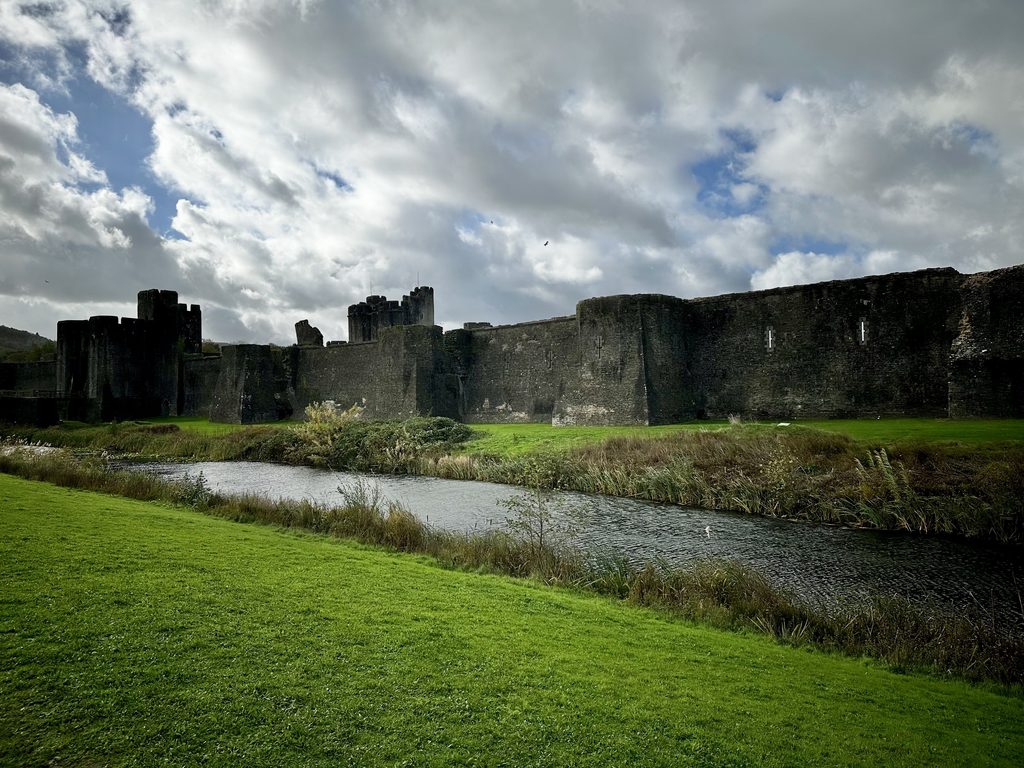
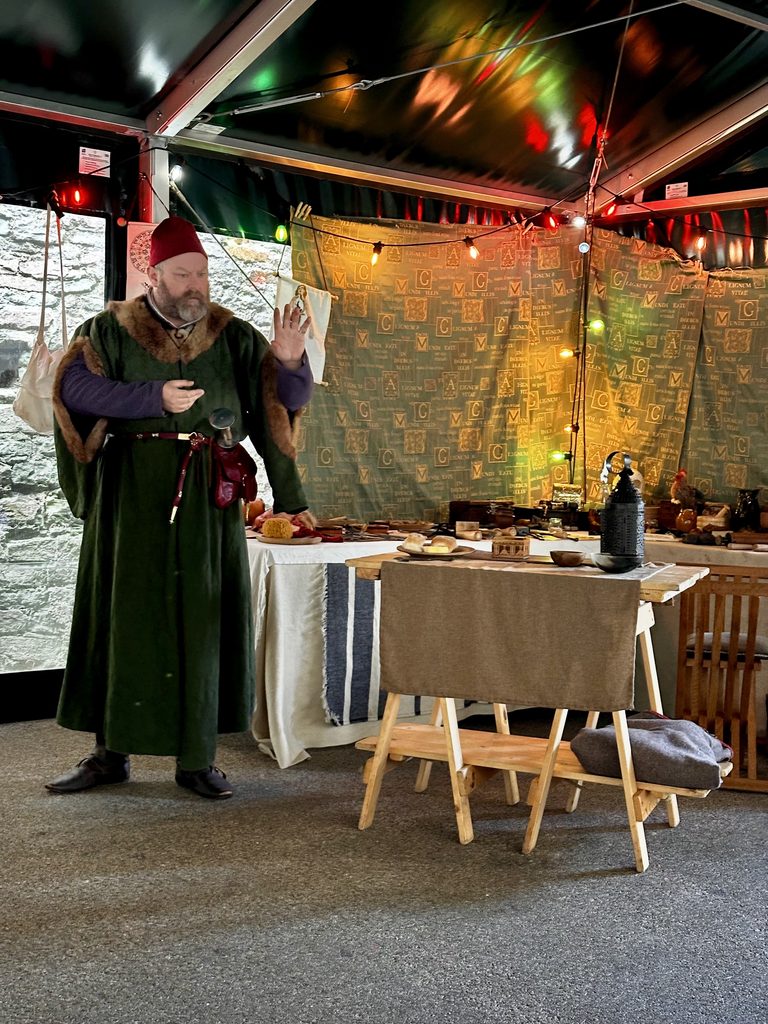
Caerphilly is the largest castle in Wales. Its concentric defences – successive lines of walls and towers – forced an attacker to overcome one obstacle only to face another. There are extensive artificial lakes and moats. Water was not decorative scenery: it was part of the defensive plan, limiting approaches and making siege operations considerably more difficult. Viewed across the water, the castle can appear almost serene; viewed as an attacker might have seen it, the same prospect becomes distinctly discouraging. The castle’s famously leaning tower adds a note of vulnerability to all this massive confidence. In contrast, on our visit to Caerphilly Castle, we met a medieval physician, complete with bottles, potions and remedies for every ailment. Provided you’re happy to donate a sample of your urine!
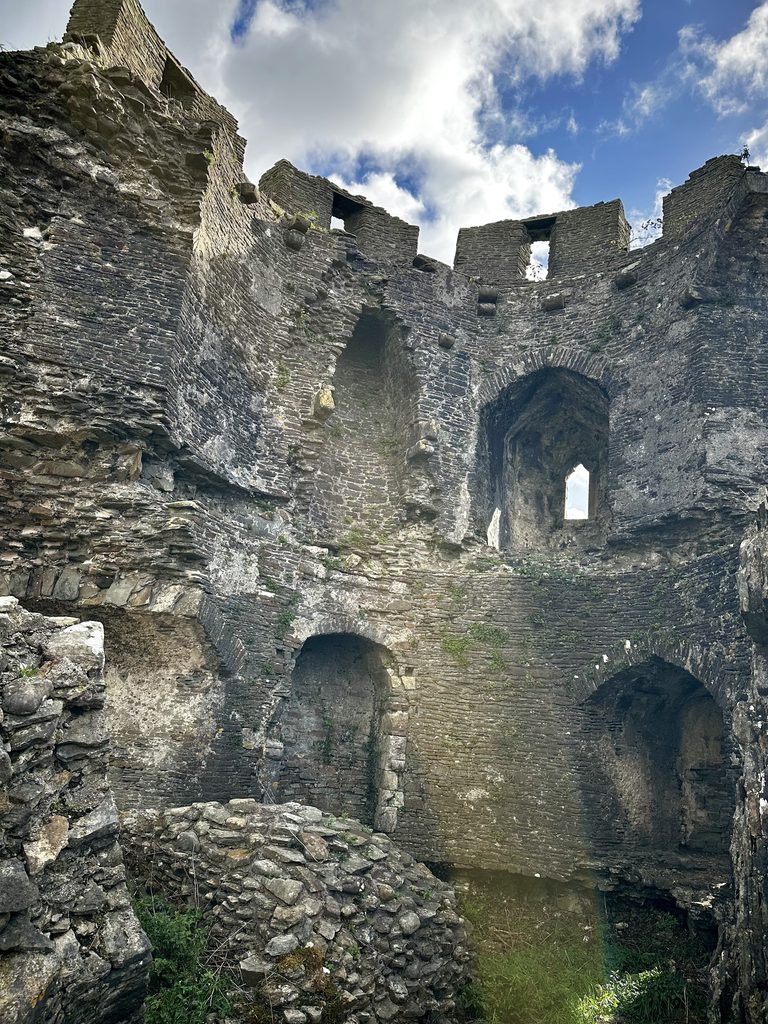
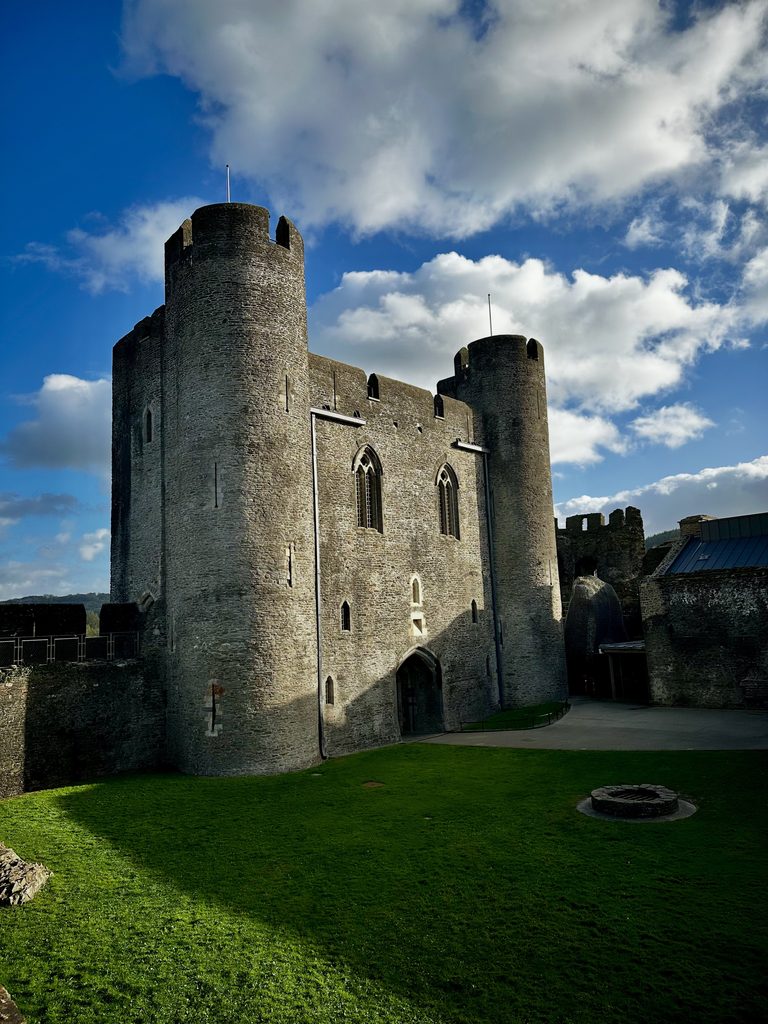
Carew Castle in Pembrokeshire wasn’t a single great act of construction, but shows centuries of adaptation. Its site had been occupied long before the Normans arrived. Around 1100, Gerald de Windsor, constable of Pembroke, established a fortification here. The early earth-and-timber defences gave way to stone. Much of the surviving medieval castle owes its form to Sir Nicholas de Carew in the late thirteenth and early fourteenth centuries. But Carew did not stop evolving when the age of great castle-building began to fade. Sir Rhys ap Thomas made substantial alterations around the turn of the sixteenth century, and Sir John Perrot later added the splendid Elizabethan north range, with windows overlooking the millpond.
Unfortunately I arrived too late to enter the castle, as it had closed by then, but I looked at the exterior and I took a couple of photos. Next time, I’ll make sure I arrive in time to see everything Carew Castle has to offer.
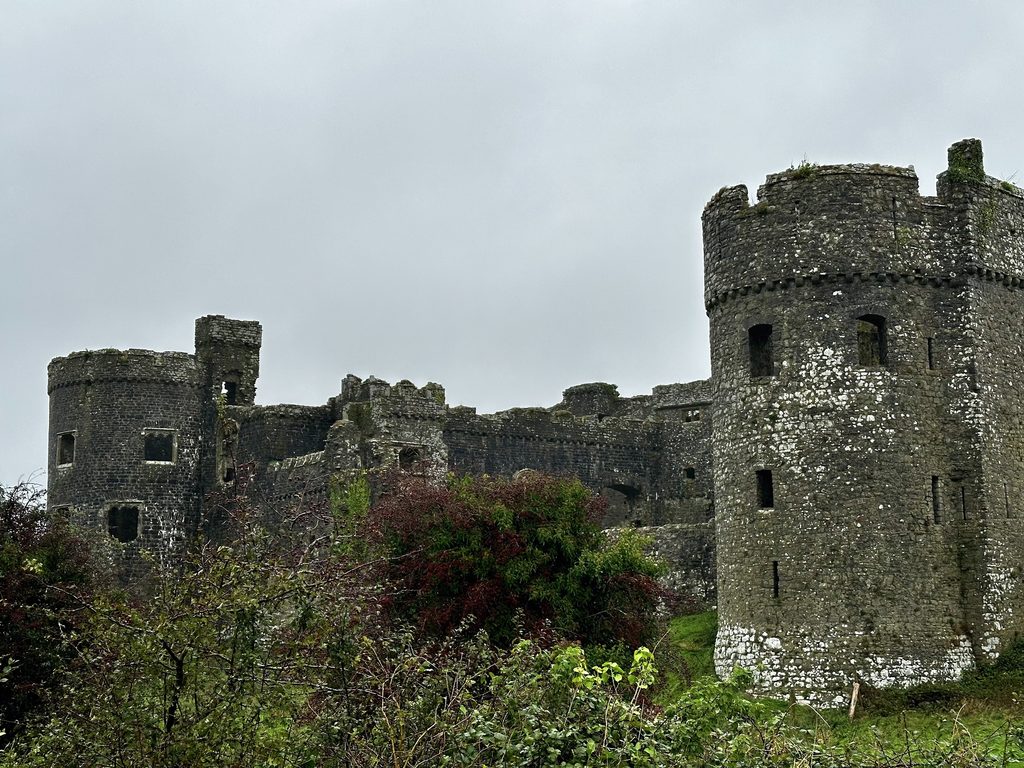
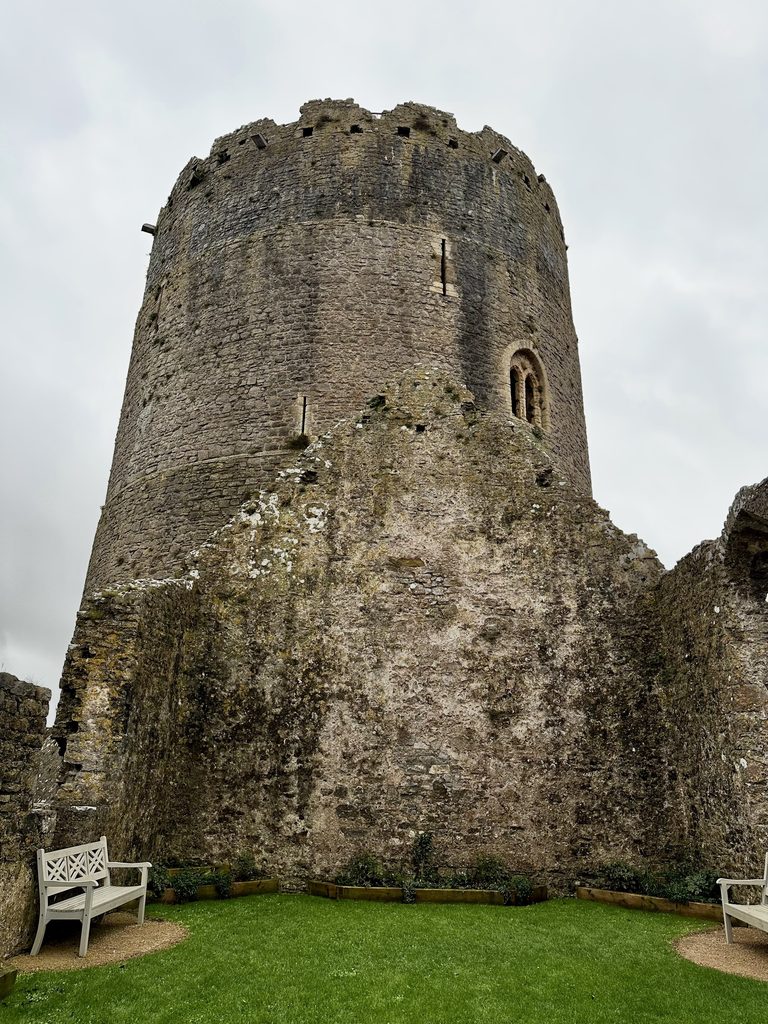
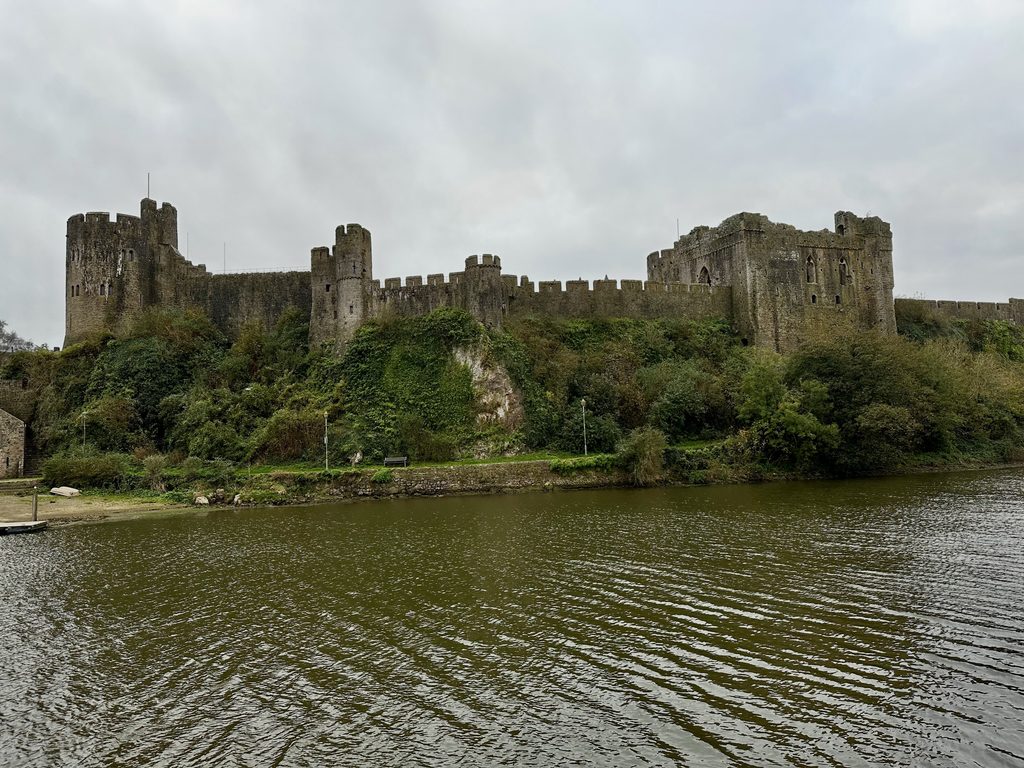
Pembroke Castle is built on a rocky promontory beside the Cleddau estuary. A Norman stronghold was established here in the late eleventh century, but the name most closely associated with its great stone transformation is William Marshal, Earl of Pembroke. Marshal rose from comparatively modest beginnings to become one of the most influential men in England, celebrated as a knight and trusted by successive kings.
In the early thirteenth century, Marshal began rebuilding Pembroke on an ambitious scale. The immense round keep, rising high above the courtyard, remains a splendid expression of lordly confidence. There is also the extraordinary Wogan, a natural cavern beneath the castle, opening towards the water. Medieval builders were careful to exploit the geology of their sites. In fact, while I was there, there was some 21st century construction or repair work going on, proving that, even in a thousand-year-old castle, the work never stops.
At Pembroke, my friends and I were given a guided tour by the wonderful Wendy Haslam, who will be featured in a forthcoming edition of The Household News. Wendy was engaging and very informative! If you visit Pembroke Castle, do go on one of these guided tours. It lasted about an hour and was fascinating – even in the rain!
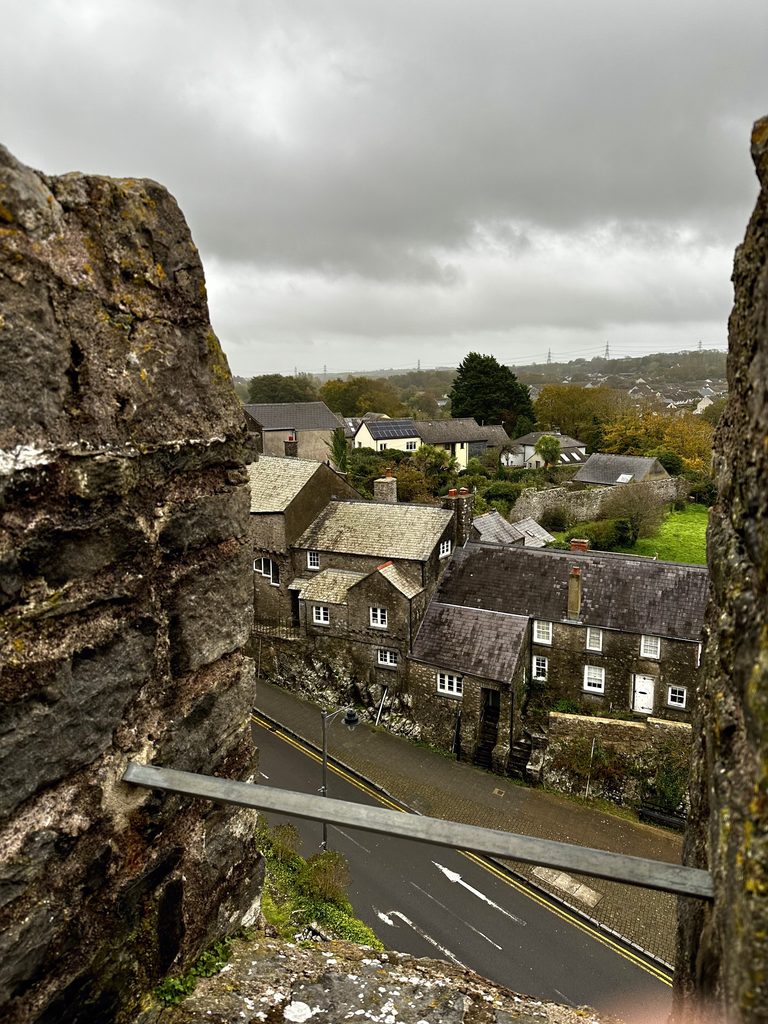
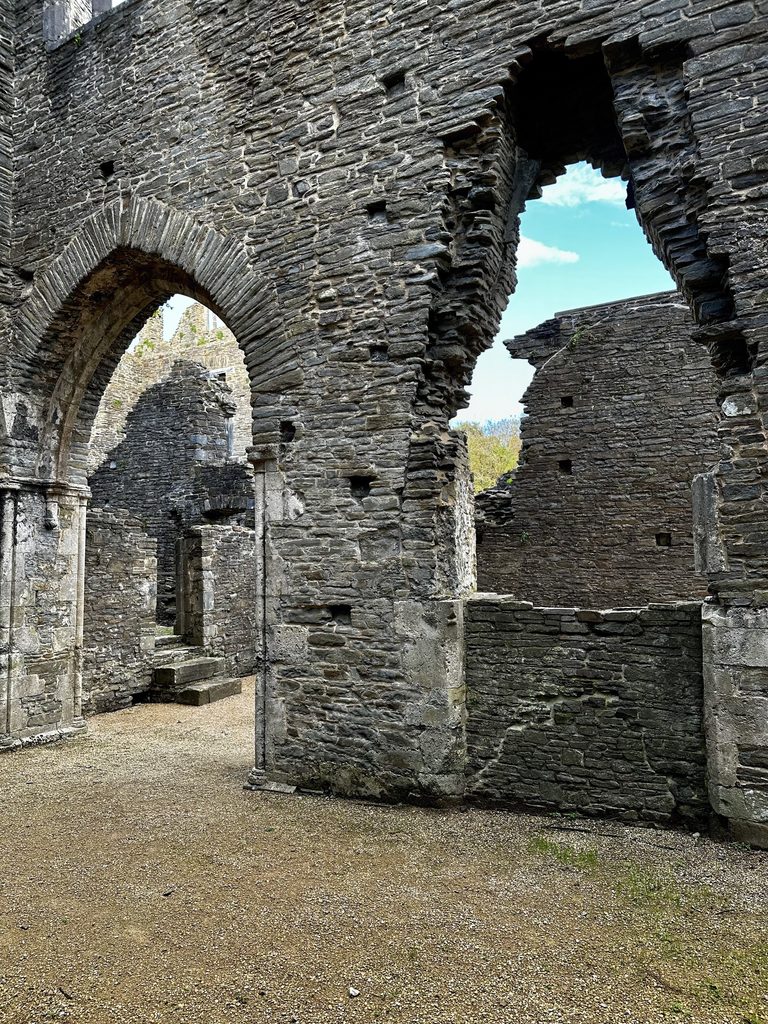
Before I set off for home, my friends took me to see Neath Abbey. Neath Abbey is not a castle, of course, but it belongs in this company. Founded in 1130 by the Norman knight Richard de Granville, it became one of the wealthiest religious houses in Wales. Its great church and substantial monastic buildings expressed a form of authority quite different from the battlements of Caerphilly or Pembroke, yet the abbey was just as much a part of the medieval landscape of landholding, patronage and influence.
The monks’ lives were ordered by prayer and worship, but a major abbey was also an economic organisation. Estates had to be managed, food produced, buildings maintained and guests accommodated. Neath supported a community of monks and lay brothers, whose labour helped sustain its prosperity.
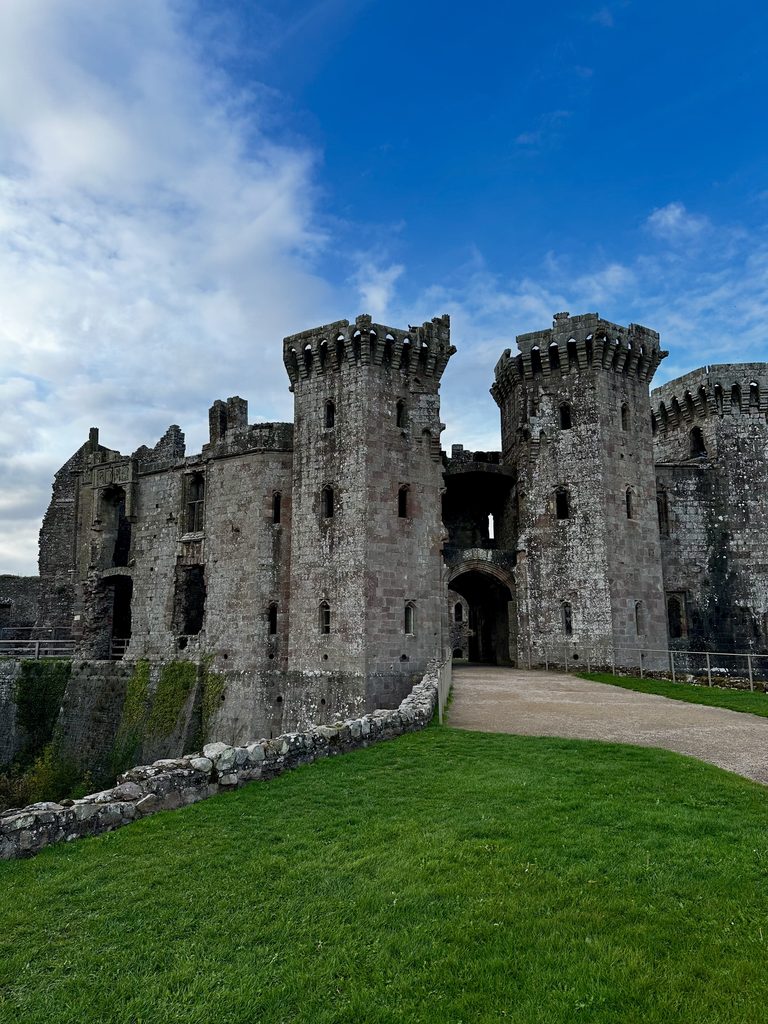
Raglan Castle, in Monmouthshire, is a reminder that castle-building did not end with Edward I. Its fifteenth-century buildings reflect a shift from defence towards magnificent residences. Sir William ap Thomas began the great tower, surrounded by its own moat; his son, William Herbert, Earl of Pembroke, developed it on a grander scale. Raglan also offered elegant accommodation, impressive courtyards and a setting designed to proclaim its owners’ standing. Later, the Somerset family added Renaissance touches. Strength and splendour existed side by side.
Its final great ordeal came in 1646, when Raglan, a Royalist stronghold, surrendered after a Parliamentary siege. The subsequent destruction of parts of the castle left the ruins I saw on my brief visit.
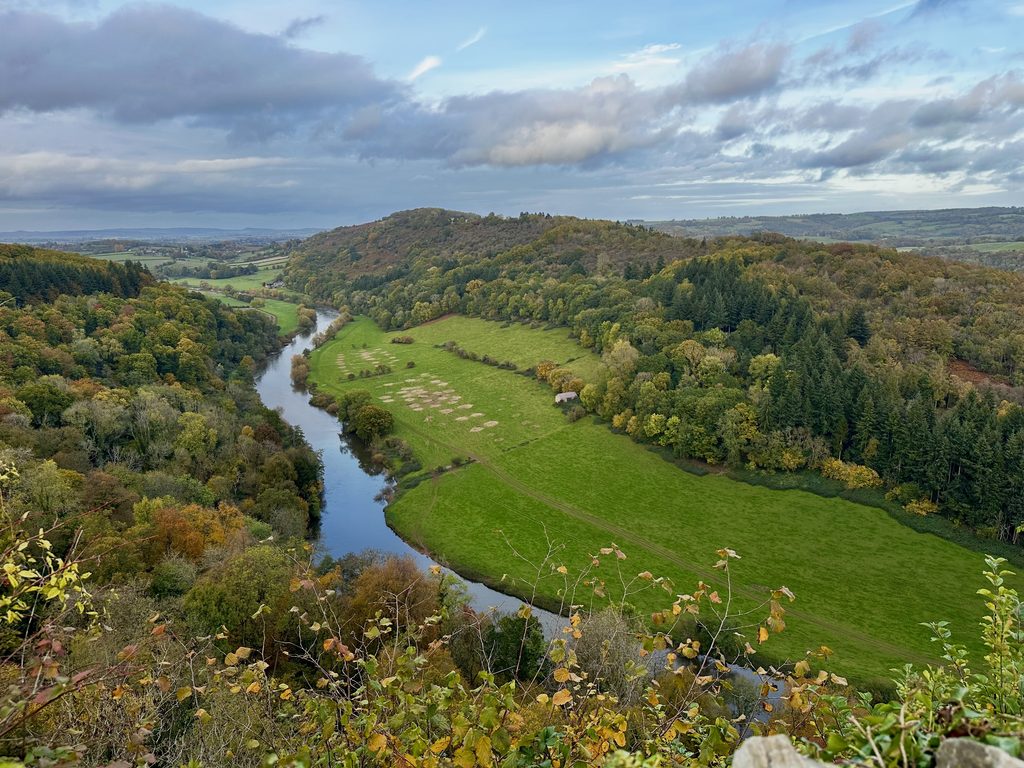
On my way east, I stopped at Symonds Yat, where you can park your car and then climb high above the valley of the River Wye. Symonds Yat lies in Herefordshire, close to the Gloucestershire border, overlooking a spectacular bend in the River Wye. Although it is not in Wales, it belongs geographically and historically to the wider borderland story that includes Goodrich Castle.
Symonds Yat Rock was the site of an Iron Age hillfort, established centuries before the Norman Conquest. Its surviving earthworks show that the strategic value of elevated positions overlooking important routes was recognised long before medieval castles appeared. A hillfort was not a medieval castle, but the underlying principle was similar: control of the landscape, protection of a community, and the advantages of a naturally defensible position.
The River Wye was an important route for trade, travel and communication. Although it was not a continuous political boundary between England and Wales, its valley formed part of the complicated geography of the Welsh Marches. From Symonds Yat Rock, the commanding view illustrates something that is easy to overlook when visiting a castle: medieval fortifications were not simply isolated buildings. They belonged to a wider landscape of rivers, roads, settlements, estates and contested territories.
I climbed up to the rock and took a photo of the view. Looking at how much you can see (and therefore command and control), it’s easy to understand why the hillfort was built here. Incidentally, the word “yat” comes from the same origin as the modern word “gate”. This was a gateway or passage through the steep, wooded hills of the Wye valley.
My final visit was to Goodrich Castle, downstream of Symonds Yat. The castle stands in Herefordshire, just across the border in England, overlooking a bend in the River Wye. It helps explain the Welsh Marches: the borderlands where powerful lords exercised extensive rights and where political loyalties could be complicated. A castle here controlled not only territory but movement along an important river crossing and route between England and Wales.
The first castle was built by an English landowner, Godric, around the end of the eleventh century. A Norman keep followed, and the fortress later passed through the hands of William Marshal. Much of the imposing castle visible today, however, was created under William de Valence and his wife Joan in the later thirteenth century – exactly the period I write about in Tales of Castle Rory. Behind the formidable walls were sophisticated living quarters. Goodrich demonstrates that a military stronghold could also sustain a large and elaborate household, and this is also the premise for the castle in my books.
For Goodrich, its most destructive conflict came in 1646, during the English Civil War. Parliamentarian forces besieged the Royalist garrison, employing a powerful mortar nicknamed ‘Roaring Meg’. The castle surrendered and was left badly damaged. The picturesque ruin I saw on my visit is therefore not simply the result of centuries of gentle decay. Goodrich bears the scars of a particular and violent episode, which occurred long after its medieval builders had gone.
And so I made my way home, driving on motorways and A-roads, leaving the castles of Wales and the Marches far behind. It’s very easy, on modern roads, listening to the radio, to music, or to podcasts, not to notice the landscape you’re driving through. Not to see the history. Not to understand how things came to be. Not to appreciate the freedom we have to go where we please. My visit to Wales, my tours around the ruins of lives lived centuries ago put a great many things into perspective for me.
Book 9 of Tales of Castle Rory is set largely in Wales. My research, whether in books, online or in person, helped me enormously. I hope you will also get the chance to visit some wonderful medieval castles, abbeys, manor houses and churches.
I write historical fiction set within a carefully researched medieval framework, and I am open about where history ends and invention begins. Each volume in Tales of Castle Rory concludes with an Author’s Note, explaining which elements are historically attested, which are fictional extensions of the record, and which move deliberately into fantasy. The stories are rooted in real medieval experience – with the workings left visible.
